Scalp micropigmentation · Macclesfield
The look of density.Not new hair.
Scalp micropigmentation uses carefully placed pigment impressions to reduce scalp contrast or imitate closely shaved follicles. It does not stimulate growth, add follicles or stop progressive hair loss.
A consultation may lead to SMP, medical treatment, hair transplantation, a hair system, cosmetic camouflage or a recommendation not to proceed.
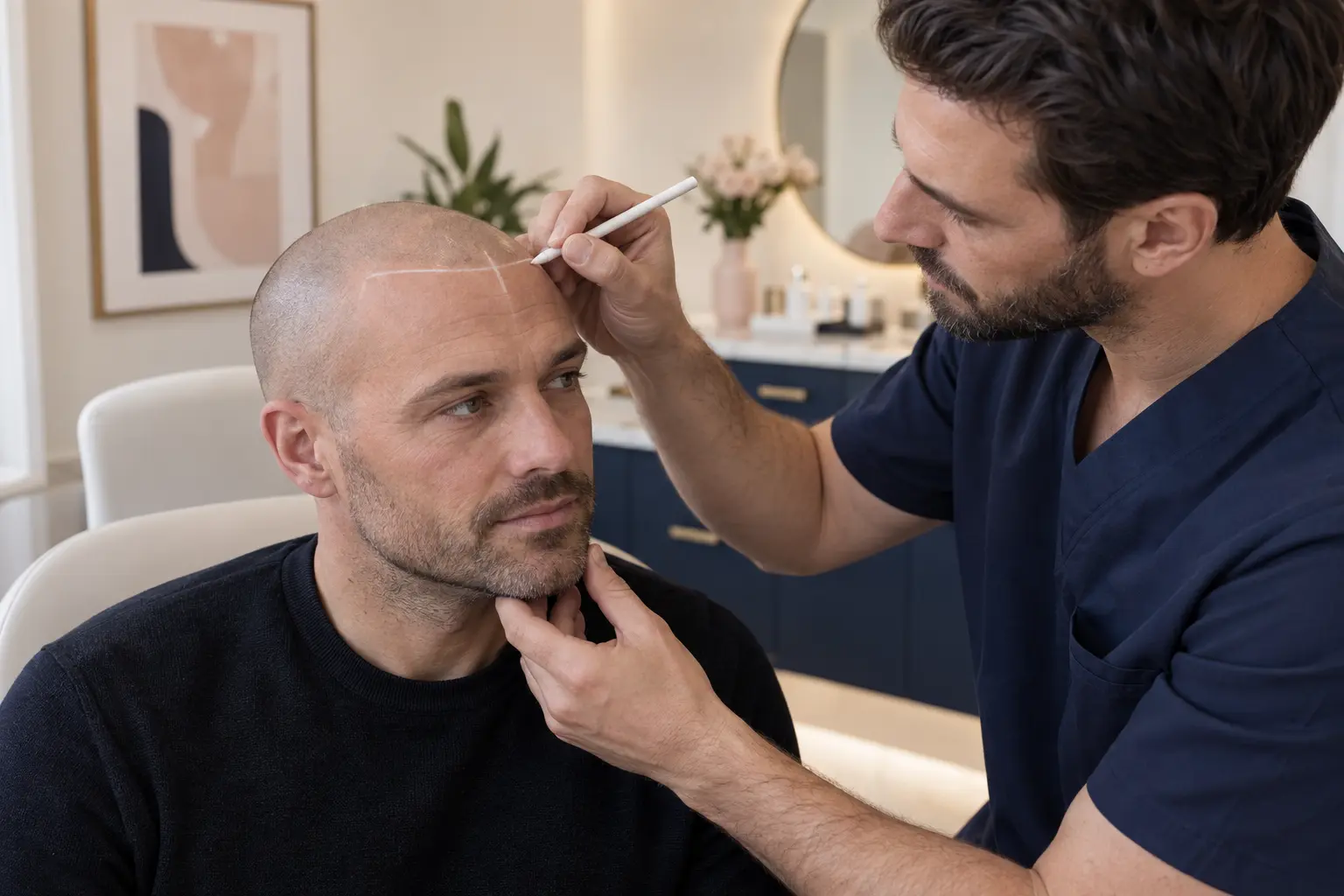
Choose the visual job
SMP is camouflage—not one treatment for every scalp.
Its value depends on the relationship between skin, pigment and real hair. A shaved scalp, diffuse thinning and a surgical scar each need a different design, density and expectation.
Scalp micropigmentation changes the way light and contrast are perceived. It can imitate the shadow of a very short follicle or reduce visible scalp between existing hairs, but it cannot create hair texture where none exists.
Closely shaved effect
Micro-impressions are distributed to resemble follicles across a consistently short or shaved style, including a conservatively designed frontal frame.
Goal: simulated stubbleDensity camouflage
Pigment may reduce scalp show-through where real hair remains across the treatment field. It does not make each strand thicker or halt thinning.
Goal: lower skin contrastScar camouflage
Selected FUT or FUE scars may be softened visually. Scar tissue can retain and spread pigment differently, so testing or staging may be prudent.
Goal: reduce visibilityCorrection planning
Old SMP that is too dark, blurred, discoloured or poorly shaped may require fading, removal or a broader correction plan—not simply more pigment.
Goal: repair, not cover-upWhen an instant result creates a long-term problem.
Pigment can be refreshed, corrected or sometimes removed, but none of those options should excuse an aggressive first treatment.
The treatment, made clear
Scalp micropigmentation is specialised cosmetic tattooing.
A fine needle deposits pigment through the skin barrier as thousands of small impressions. The treatment is non-surgical, but describing it as non-invasive is inaccurate because the skin is repeatedly punctured.
Dot size, depth, distribution and tone are built gradually to imitate follicular shadow rather than drawn hair. Placement that is too deep, dense, large or dark can blur, migrate or look artificial—especially as the scalp, hairstyle and remaining hair change.
Candidate selection
The right scalp, hairstyle and expectation must align.
Suitability depends on diagnosis, disease stability, skin condition, scar behaviour, remaining-hair pattern, preferred haircut, pigment contrast, future loss and willingness to maintain the result.
SMP may be considered when…
SMP may be unsuitable or premature when…
The assessment pathway
Plan the future scalp—not just today’s photograph.
A credible consultation defines what SMP can camouflage now, how the untreated hair may change and what correction would involve if the design or pigment ages poorly.
Confirm the diagnosis
We review onset, progression, family history, previous treatment, scalp symptoms, medicines and whether medical investigation or stabilisation is appropriate.
Examine skin, hair and scars
Oiliness, flaking, inflammation, scar texture, colour contrast, remaining density and the planned hair length are assessed in consistent light.
Choose the visual effect
Shaved simulation, density camouflage and scar work are separate objectives. The treatment field must make sense as a whole.
Design conservatively
Hairline height, contour, temple recession, softness and irregularity are agreed with age, facial proportions and future loss in mind.
Review pigment and safety
Products, allergies, test work where appropriate, single-use equipment, hygiene controls, contraindications and emergency arrangements should be explained.
Plan staging and correction
The number and spacing of sessions, healing reviews, touch-ups, fading, sun protection, complaint pathway and possible removal are documented before treatment.
Pigment or follicles?
SMP and transplantation create different kinds of coverage.
One changes contrast by placing pigment in the skin. The other redistributes living follicles. The right choice depends on diagnosis, donor supply, hairstyle, texture goals, tolerance for surgery and long-term plan.
Important: the treatments can sometimes complement one another, but SMP should usually wait until transplant growth and scars have matured so pigment is not placed against an unfinished surgical result.
Scalp micropigmentation
Specialised cosmetic tattooing creates follicle-like shadows or reduces visible scalp contrast.
Hair transplantation
Living follicles are surgically moved from a finite donor area into selected recipient sites.
Design by viewing distance
Dots should behave like shadow—not decoration.
Frontal frame
A soft, age-appropriate and irregular transition is usually more credible than a dark straight line. Future recession must be considered before lowering the hairline.
Top and crown
Density is built to reduce scalp contrast without overpowering the surrounding hair. Crown direction and changing light require careful distribution.
Scars and repairs
Scar tissue may take pigment unevenly or allow spreading. Correction is often more complex than first-time SMP and may need testing, fading or removal.
If treatment is appropriate
Build lightly. Review healed pigment. Then decide what to add.
Exact timings and session numbers vary. Your written consent should name the practitioner, products, treatment area, likely maintenance, risks, aftercare and correction arrangements.
Confirm photographs and design
Baseline images, haircut, treatment field, hairline and agreed limits are reviewed in consistent lighting before any pigment is placed.
Prepare the scalp safely
The skin is checked, cleaned and prepared. Single-use sterile needle cartridges and contamination controls should be visible and documented.
Create a conservative first layer
Fine impressions are placed at controlled depth and spacing. The initial session should leave room to adjust after healing.
Allow pigment to settle
Fresh pigment can look darker and sharper before surface healing. Picking, sweating, soaking and sun exposure are managed according to written advice.
Review in neutral light
Healed colour, retention, dot size, density and symmetry are assessed before a further layer is planned.
Refine—not automatically darken
Later sessions may adjust distribution or softness. More pigment is not always better, and stopping early can protect a natural result.
Healing and maintenance
The fresh result is not the finished colour.
Your practitioner’s written instructions take priority. These phases are broad guideposts rather than promises; skin response, pigment retention and session spacing vary.
0–2
Redness and tenderness
The scalp may look red, feel tight or tender and show pinpoint swelling. Fresh impressions can appear darker than the eventual healed tone.
3–7
Surface healing
Dryness, light crusting or flaking can occur. Do not pick or scratch. Washing, exercise and hats resume only as advised.
1–2
The colour softens
As the surface settles, pigment may look lighter or less uniform. This is the point to observe—not rush into an unplanned top-up.
SESSION
Layer after review
A further session is considered only after adequate healing, using the retained pattern to guide any additional density or refinement.
ON
Protect the result
UV exposure, skin type, oiliness, products and lifestyle can affect fading. Scalp sun protection should form part of long-term care.
ON
Review before refreshing
Pigment, hair and skin age differently. A touch-up should reassess shape and future loss rather than simply reproduce the original density.
Understand the possible complications.
SMP is non-surgical, but it repeatedly breaks the skin and leaves pigment behind. Technique, products, hygiene and healing all matter.
Seek prompt medical advice for increasing pain, heat, swelling, spreading redness, discharge, fever, severe itching, blistering or other unexpected symptoms.
Plan beyond the first session
Pigment stays still. Hair loss may not.
The most convincing design today can become conspicuous if the real hair recedes, greys, grows longer or is styled differently tomorrow.
Protect the diagnosis
Cosmetic camouflage should not replace appropriate investigation or treatment of an underlying scalp or hair-loss condition.
Keep the hairline conservative
An age-appropriate contour leaves room for progression and is usually easier to maintain than a low, sharply defined frame.
Use sun protection
UV exposure contributes to pigment fading. A scalp-safe protection plan matters once the treated skin has fully healed.
Review before every touch-up
Shape, colour, dot size, skin condition and remaining hair should be reassessed before adding more pigment to an older result.
Clinical context
Camouflage works best when the hair-loss plan is honest.
Your consultation should identify who diagnoses the loss, who performs the micropigmentation, their specific training and experience, how infection control is managed and who takes responsibility for complications or correction.
Dr Fida Ul Haq
Hair restoration surgeon
Dr M Muhammad
Lead hair transplant surgeon
Our principle: SMP is a cosmetic camouflage option within a wider hair-loss pathway. The practitioner responsible for pigment placement should be named in your treatment plan, with their portfolio, training, insurance, hygiene arrangements and aftercare responsibilities available for review.
Questions worth asking
Clear answers before pigment is placed.
These are general explanations, not personal medical advice. Suitability can only be decided after assessment.
What is scalp micropigmentation?
Scalp micropigmentation is specialised cosmetic tattooing that places small pigment impressions into the scalp to imitate the shadow of closely shaved follicles or reduce contrast beneath thinning hair. It is non-surgical but it does break the skin.
Does scalp micropigmentation grow hair?
No. SMP does not create follicles, stimulate growth, thicken existing hairs or stop progression. It changes the visual contrast between hair and scalp, so diagnosis and appropriate hair-loss treatment may still be needed.
What can scalp micropigmentation be used for?
Selected uses include creating a closely shaved follicle effect, reducing visible scalp beneath diffuse thinning, softening the appearance of mature hair-transplant scars and carefully planned corrective work. Each requires a different assessment and design.
Is scalp micropigmentation permanent?
Pigment is intended to remain in the skin, but its appearance can fade, soften, migrate or change over time. Sun exposure, skin type, oiliness, technique and pigment affect longevity. Touch-ups may be requested, while correction or removal can require further procedures.
How many SMP sessions will I need?
There is no responsible universal number. Treatment is commonly staged so healed colour and retention can guide the next layer. The area, visual goal, scar tissue, skin response, previous pigment and desired softness all influence the plan.
Is scalp micropigmentation painful?
Discomfort varies by person and scalp area. Repeated needle contact can cause stinging, tenderness or soreness, and the scalp may remain red or sensitive afterwards. Comfort measures and any anaesthetic arrangements should be explained before treatment.
What are the risks of scalp micropigmentation?
Risks include infection, allergic or inflammatory reaction, scarring, pigment migration, blurred impressions, uneven retention, fading, colour change and an unnatural design. Poor results may need additional pigment, fading or laser removal, none of which guarantees complete correction.
How much does scalp micropigmentation cost?
Cost depends on the treatment area, number of planned sessions, scar or corrective work, complexity and follow-up arrangements. Your written quote should explain what is included, touch-up terms and any finance conditions. Transplant graft-price cards are not a valid way to price SMP.
A consultation, not a commitment
Choose the effect before choosing the pigment.
Meet the clinical team in Macclesfield to review the diagnosis, remaining hair, scalp health, hairstyle, scars, visual goal, alternative treatments and a conservative long-term design.
This page provides general information and is not a diagnosis, personalised treatment recommendation or guarantee of outcome.