FUE hair transplant · Macclesfield
FUE hair restoration.Planned around you.
A surgeon-led option for suitable types of hair loss. We explain the established FUE procedure clearly—from donor assessment and graft planning to recovery, risks and long-term expectations.

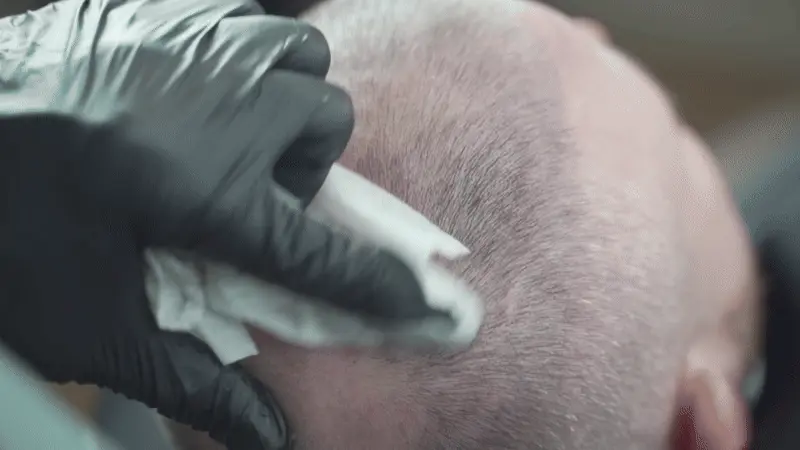
The correct name
The procedure is FUE. Precision Hair Clinic is the provider.
Clear language matters in healthcare. FUE stands for follicular unit extraction: an established hair-transplant technique, not a proprietary type of transplant.
During FUE, follicular units are removed individually from a suitable donor area—usually at the back or sides of the scalp—and placed into carefully planned recipient sites. Hairline design, donor capacity, hair characteristics and the likely course of future hair loss all affect the plan.
FUE and FUT are different surgical approaches
Assessment first
A transplant is not the right first step for everyone.
The cause and stability of hair loss, donor supply, health, medication and expectations should be considered before surgery is recommended.
FUE may be considered when…
A different route may be safer when…
From assessment to aftercare
How an FUE hair transplant is planned and performed.
The exact sequence, duration and number of grafts vary. Your surgeon should explain who performs each stage and obtain informed consent before treatment.
Consultation and diagnosis
Your pattern of loss, scalp, donor area, health, medicines and goals are assessed. Non-surgical options or no treatment may also be discussed.
Design and graft planning
The proposed hairline, recipient zones and estimated graft range are considered alongside donor capacity and future hair loss—not just the area you see today.
Preparation and anaesthetic
The donor area is usually trimmed or shaved. Local anaesthetic is used; injections can sting and sensations such as pressure or tugging vary between people.
Individual graft extraction
Follicular units are removed one by one with a small punch. The clinical team checks and handles grafts carefully before placement.
Recipient sites and placement
Small recipient sites are created according to the agreed design, direction and distribution. Grafts are then placed into those sites.
Aftercare and follow-up
You receive written instructions on protecting the grafts, washing, activity, medicines and when to seek advice, plus the clinic's follow-up schedule.
On the day
Calm, clinical and clearly explained.
An FUE procedure often takes much of the day, although timing depends on the number of grafts and the individual plan. Your clinical team will explain the schedule and practical arrangements beforehand.
Clear expectation: “Pain-free” is not a responsible guarantee. The aim is to manage discomfort appropriately and tell you what sensations may occur.
Recovery, growth and risk
Healing happens first. Growth takes months.
Your surgeon's instructions take priority. Timings below are general guideposts rather than promises; recovery and hair growth vary between people.
0–2
Protect the grafts
Tenderness, tightness, swelling and spotting can occur. Avoid touching or rubbing the recipient area.
2–5
Early healing
Dressings, if used, are commonly removed within this period. Swelling and scabbing may still be visible.
6–14
Gentle washing
Washing is reintroduced according to your aftercare instructions. Scabs gradually settle; the grafts still need care.
2–8
Shedding can happen
Transplanted hairs commonly shed before a new growth cycle begins. This can be an expected phase.
4 MTH
Early growth may start
New hairs may begin to appear, often fine or uneven at first. Progress is gradual.
MTH
Maturation
Full maturation can take 10 to 18 months. Coverage, texture and growth vary; some grafts may not grow.
Understand the possible complications.
Hair transplantation is surgery. Your clinician should discuss risks in relation to your own health and plan.
This page provides general information and does not replace an individual medical consultation, diagnosis or consent discussion.
Treatment-day detail
What the scalp can look like around the time of treatment.

Early redness and placement sites
The recipient area can look red and closely spaced placement sites may be visible immediately after surgery.

Small extraction sites
Individual extraction points can be visible while the donor area heals. Their long-term visibility varies.
These clinical images illustrate appearance around treatment; they are not a promise of healing time, hair growth, density or final outcome. Individual results vary.
Your clinical team
Know who is responsible for your care.
Your consultation should make clear who assesses you, who designs the plan, who performs each surgical stage and who to contact after treatment.
Dr Fida Ul Haq
Hair Restoration Surgeon
Dr M Muhammad
Lead FUE Surgeon
Patient perspectives
Care remembered for the details.
The consultation felt thorough and unhurried, with the stages and aftercare explained clearly.
The clinic felt friendly and organised, and the procedure included breaks throughout the day.
Questions were answered and the team helped make an initially nervous experience feel more manageable.
Condensed from patient feedback displayed by Precision Hair Clinic. Individual experiences, recovery and results vary.
Useful questions
Straight answers before you decide.
Your own surgeon's advice may differ because diagnosis, donor supply, health and treatment plans are individual.
Does FUE leave scars?
Yes. FUE creates many small dot scars where follicular units are removed. They are often less conspicuous once healed and when covered by surrounding hair, but visibility depends on punch size, healing, skin and hair characteristics, extraction pattern and haircut length. It should not be described as scar-free.
Is an FUE hair transplant pain-free?
That cannot be guaranteed. Local anaesthetic is used, but injections may sting and people can experience pressure, pulling, tenderness or discomfort during and after treatment. Tell the team if you are uncomfortable so they can assess and respond.
Will my head need to be shaved?
The donor area is commonly trimmed or shaved for FUE. In some plans only a smaller area is trimmed, but this is not suitable for every patient or graft number. The approach should be agreed during assessment.
How many grafts will I need?
There is no responsible one-size-fits-all number. An estimate depends on the size of the recipient area, desired coverage, hair and skin characteristics, donor capacity, existing miniaturisation and the need to preserve options for future hair loss.
When can I return to work and exercise?
This varies with your work, the procedure and healing. Many people allow time for redness, swelling or scabbing to settle. Strenuous activity is usually restricted initially. Follow the personalised instructions provided by your surgeon.
When will I see the final result?
Transplanted hairs often shed in the first weeks. Early new growth may start around four months, while full maturation can take roughly 10 to 18 months. Timing, growth and density vary, and not every graft is guaranteed to grow.
Can hair loss continue after a transplant?
Yes. Transplanted follicles may retain donor characteristics, but surrounding native hair can continue to thin. That is why diagnosis, conservative design and a longer-term plan matter.
Should I stop medicines or hair-loss treatments?
Do not start, stop or change prescribed or non-prescribed medicines without appropriate clinical advice. Give the clinic a complete list of medicines and supplements so you can receive personalised pre- and post-procedure instructions.
A considered next step
Start with a proper assessment—not a promise.
Discuss your hair loss, donor area and options with the clinic before deciding whether surgery is right for you.