Low-level light therapy · Macclesfield
Light therapy for hair loss.Measured, not overpromised.
Low-level light therapy (LLLT), also called photobiomodulation, is a non-invasive option that may support hair growth in selected patients. We begin with the diagnosis, then decide whether it belongs in your wider hair-loss plan.
The treatment, clearly defined
Low-level light therapy is supportive care—not a cure for every type of hair loss.
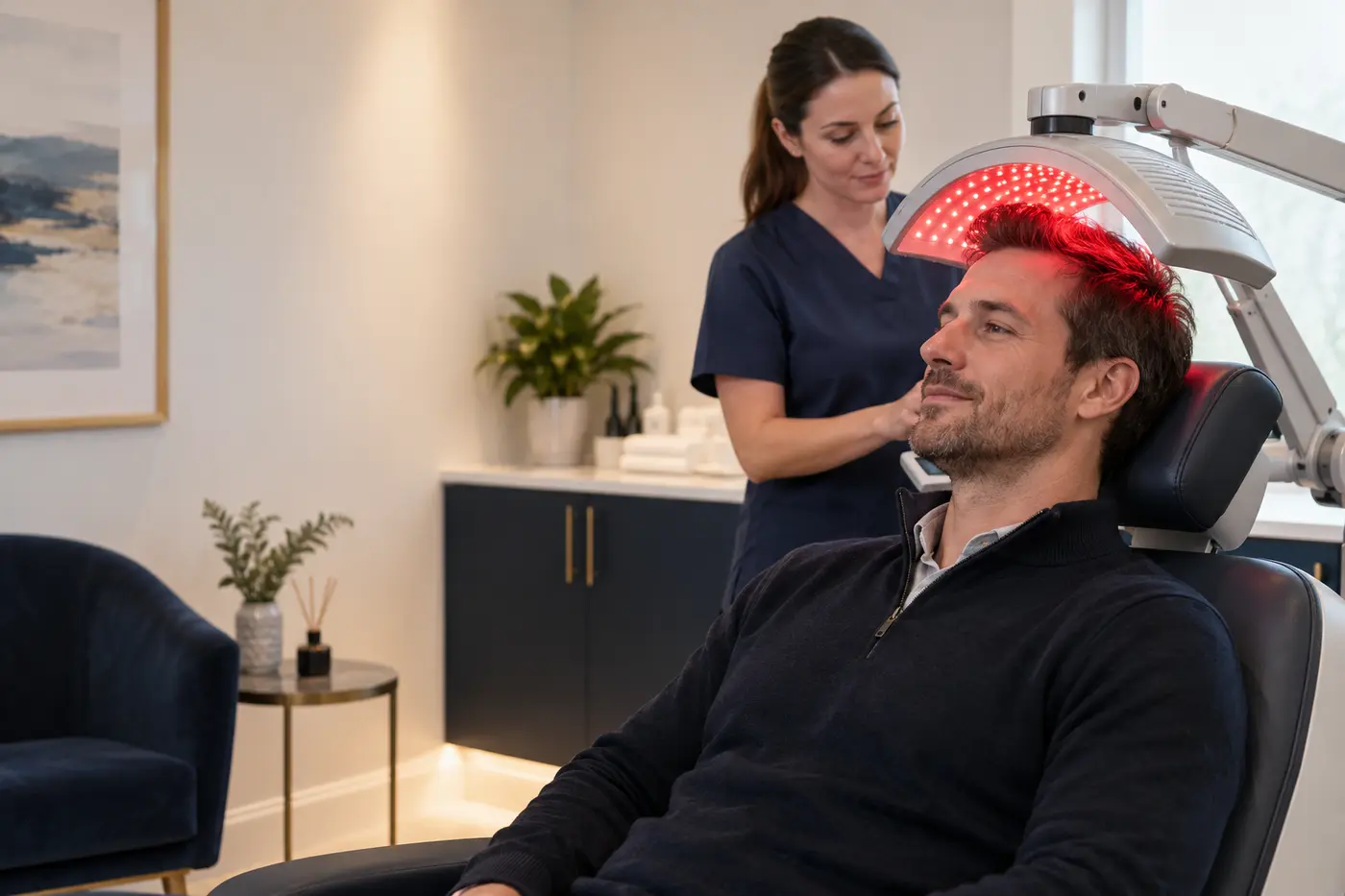
LLLT delivers low-intensity red or near-infrared light to the scalp through a device designed for photobiomodulation. It is different from laser hair removal and does not heat or deliberately damage the follicle.
The treatment has been studied most often in androgenetic alopecia—male or female pattern hair loss. Research suggests that some patients may experience an improvement in measures such as hair count, thickness or coverage when a defined protocol is followed. It cannot create new follicles or reliably restore smooth, long-standing bald or scarred areas.
What does the evidence actually say?
Sham-controlled trials have reported average improvement in selected hair measurements for some people with pattern hair loss. Those studies used particular devices, schedules and follow-up periods, so the findings do not support blanket claims that every device works for every person.
Assessment first
The right diagnosis matters more than the device.
“Hair loss” describes many different conditions. A treatment plan should reflect the cause, activity, duration, donor pattern, scalp health and your wider medical history.
LLLT may be considered when…
Pause and investigate when…
A considered programme
From baseline assessment to a meaningful review.
Your schedule should be based on the device being used and your clinical plan. Frequency, session length and review points are not interchangeable between all systems.
Consultation and diagnosis
We review the pattern and duration of loss, scalp health, family history, general health, medicines, previous treatment and your goals.
Baseline documentation
Standardised photographs—and trichoscopy or other measurements where useful—create a more reliable reference than memory or mirror checks.
Protocol selection
The device, treatment area, exposure time, frequency, eye-safety measures and review date are explained before starting.
Comfortable light delivery
The scalp is positioned beneath or within the device for a timed session. No anaesthetic, needles or incisions are involved.
Consistency between reviews
Attendance and any home element are recorded. More light is not assumed to be better; follow the defined schedule.
Objective progress review
Comparable images and measurements are reviewed alongside tolerance and adherence before continuing, changing or stopping the plan.
Why protocols differ
“Laser therapy” is not one universal treatment.
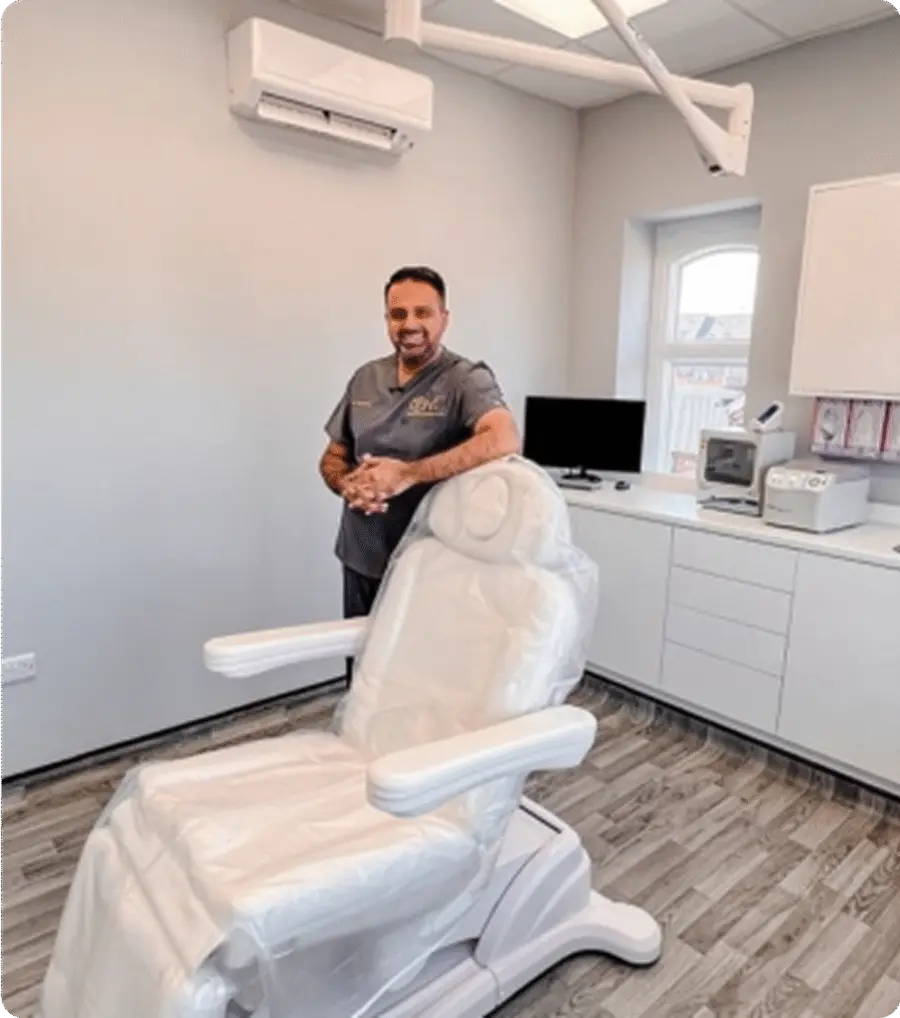
Devices vary in wavelength, power, coverage, delivery method and intended schedule. Evidence from one tested device cannot automatically be transferred to every cap, comb, helmet or clinic canopy.
Clear expectation: a stronger sensation or brighter-looking device does not prove a better clinical dose. Follow the prescribed protocol rather than increasing exposure yourself.
Progress takes time
Look for a trend—not an overnight change.
Hair grows in cycles. A fair review usually needs consistent treatment, comparable photographs and enough time to distinguish real change from normal variation.
Record the baseline
Diagnosis, scalp condition, photographs and other treatments are documented before the first session.
WEEKS
Check tolerance
An early review can assess adherence and scalp tolerance. Visible change may still be subtle or absent.
MONTHS
Compare properly
Standardised images and agreed measurements help judge whether there is a meaningful response.
Decide what is worthwhile
Continue, adjust or stop based on response, burden, cost and the wider plan. Maintenance may be advised.
Results deserve better than a bathroom selfie.
Small changes in lighting, angle, hair length or styling can make density appear very different.
Timings are general guideposts, not a guarantee. Your clinician may recommend a different review schedule based on the device and diagnosis.
Part of a wider plan
LLLT may be one element—not automatically the whole answer.
Diagnosis and monitoring
Some shedding needs blood tests, scalp treatment, dermatology input or observation rather than immediate procedural care.
Evidence-based medication
Topical or oral options may be discussed where clinically appropriate, with benefits, limitations and risks explained individually.
PRP or microneedling
Other non-surgical options may be considered after assessment; combining treatments should have a clear reason and review plan.
Hair transplantation
For suitable established loss, surgery redistributes donor follicles. LLLT cannot reproduce that change in coverage.
Not every patient needs multiple treatments. A simpler plan is often preferable when it meets the clinical goal.
Safety without absolutes
Non-invasive still requires proper safety screening.
LLLT is generally well tolerated in clinical studies, but suitability and safety depend on the person, scalp, medicines and device. “Safe for everyone” is not an appropriate promise.
Useful questions
Straight answers about LLLT.
These are general answers. Your diagnosis, medical history and the device protocol may change the advice you receive.
Is LLLT the same as laser hair removal?
No. Hair-removal lasers use a different energy strategy intended to damage follicles. LLLT or photobiomodulation uses low-intensity light intended to influence cellular activity without deliberately heating or destroying the follicle.
Does LLLT guarantee hair regrowth?
No. Controlled studies suggest that some people with androgenetic alopecia can improve in average measures such as hair count, thickness or coverage, but response varies and not every person benefits. It cannot create new follicles or guarantee a visible cosmetic change.
How many sessions will I need?
There is no universal schedule. The device, diagnosis and treatment plan determine session length and frequency. Many research protocols involve repeated use over several months, followed by review. We will explain the proposed schedule before you commit.
Is the treatment painful and is there downtime?
No incisions or anaesthetic are involved, and most people do not need recovery time after a session. Sensations and tolerance still vary; warmth, scalp sensitivity or headache can occur. Tell the clinician if you feel unwell or uncomfortable.
Is it suitable for every hair and skin type?
Hair texture or skin tone alone does not determine suitability. The diagnosis, stage of loss, scalp health, medical history, medicines and device instructions matter. It should not be marketed as suitable for everyone.
Can I combine LLLT with minoxidil, PRP or a transplant?
Sometimes, but combination treatment should have a clear clinical rationale. Tell us about everything you use. Do not start, stop or change prescribed or non-prescribed treatment without appropriate advice.
Are clinic devices better than home caps or combs?
Design, scalp coverage, output, wavelength, protocol, quality controls and evidence differ between products. A clinic setting also provides assessment and monitoring. The phrase “laser device” alone does not establish effectiveness.
What happens if I stop?
Pattern hair loss can continue independently of LLLT, and any benefit may not be maintained after treatment stops. Your review should consider response, maintenance burden, cost and other clinically appropriate options.
A better first step
Start with the cause of your hair loss—not the promise of a device.
Arrange an assessment to discuss whether LLLT is appropriate, what it can realistically add and how progress would be measured.